









Understanding Wheel Fitment
Wheel fitment is more than choosing a design. It is the balance between wheel diameter, width, offset, PCD, center bore, brake clearance, and vehicle stance. Every measurement affects how the wheel sits on the car, how it clears the suspension, and how it supports the overall driving feel.
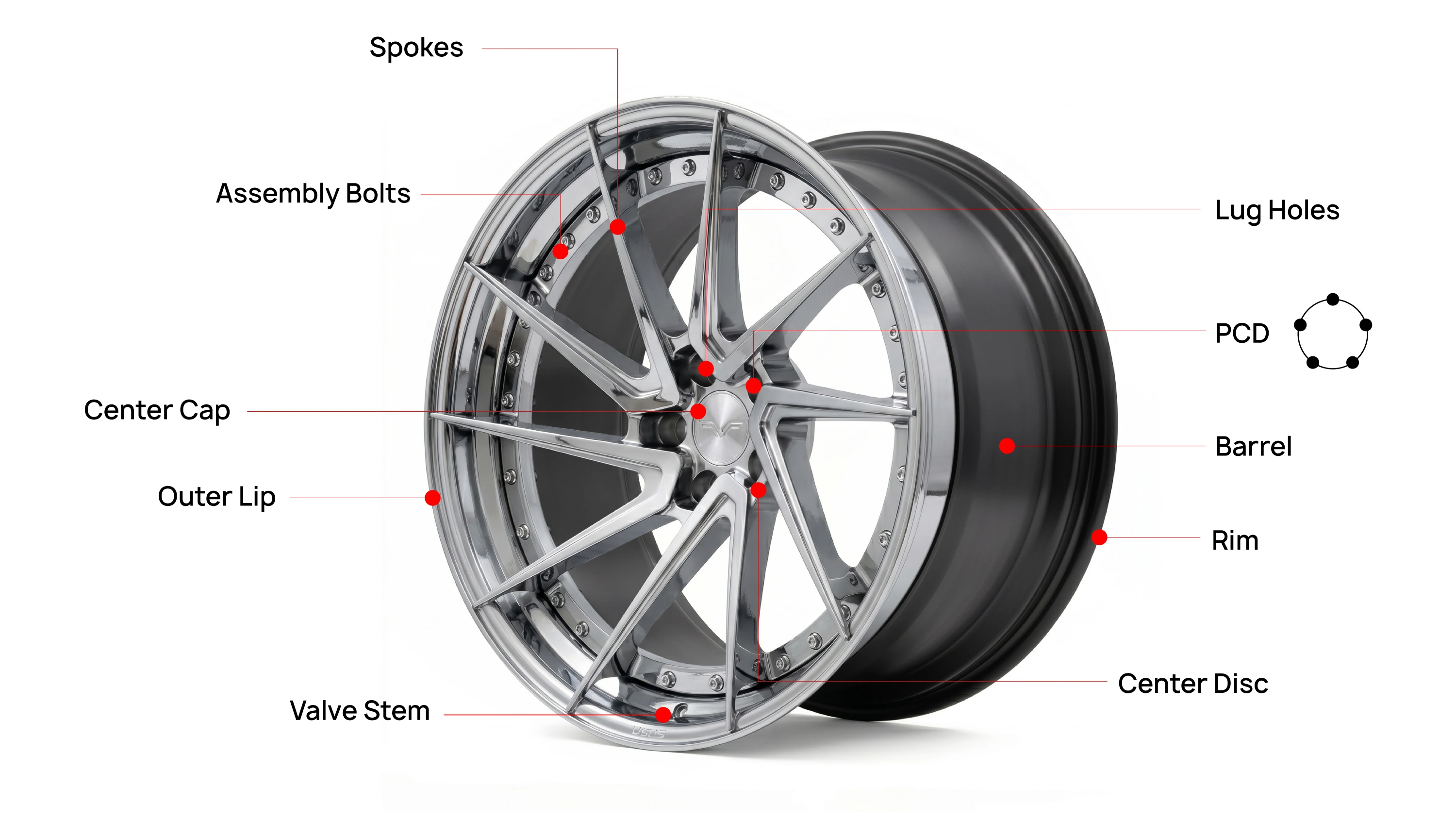
Wheel Components
Understanding the Key Parts of a Wheel
Every wheel is made up of several important parts, each with its own function in structure, fitment, and design. Understanding these components helps explain how a wheel performs, fits the vehicle, and creates its overall visual identity.
Center Disc
The Main Structural Face of the Wheel
The center disc is the main face of the wheel and one of its most important structural parts. It connects the wheel to the hub and defines much of the wheel's visual design through its shape, surface, and spoke layout.
Spokes
The Structure That Connects the Center to the Rim
The spokes connect the center disc to the outer rim and help distribute load across the wheel. Their design affects not only appearance, but also strength, weight, and brake visibility.
Center Cap
The Detail That Completes the Center Area
The center cap covers the hub area in the middle of the wheel. It completes the overall look and can be customized with different logos, colors, and finishes to match the wheel or vehicle style.
Lug Holes
The Mounting Points for Installation
Lug holes are the openings used to mount the wheel onto the vehicle hub using lug bolts or lug nuts. Their position and spacing must match the vehicle exactly for safe and precise installation.
PCD
The Bolt Pattern Measurement
PCD stands for Pitch Circle Diameter. It refers to the diameter of the imaginary circle formed by the center points of the lug holes, and it is a critical measurement for correct wheel fitment.
Rim
The Outer Edge That Supports the Tire
The rim is the outer edge of the wheel where the tire is mounted. It plays an important role in supporting the tire bead and defining the wheel's overall diameter and visual profile.
Barrel
The Inner Body of the Wheel
The barrel is the inner body of the wheel located behind the face. It helps determine wheel width, inner clearance, and compatibility with brake and suspension components.
Outer Lip
The Outer Section That Enhances Depth and Style
The outer lip is the visible outer section of the wheel, especially noticeable on multi-piece designs. It adds visual depth and contributes to the wheel's premium and performance-oriented appearance.
Assembly Bolts
The Hardware That Joins Multi-Piece Wheels Together
Assembly bolts, sometimes labeled as pierce bolts, are used on multi-piece wheels to join the center disc, outer lip, and barrel together. They are both functional and visual elements in the wheel design.
Valve Stem
The Point Used to Fill and Maintain Air Pressure
The valve stem is the part used to inflate the tire and maintain proper air pressure. Although small, it is essential for daily usability, tire performance, and driving safety.
Wheel Diameter and Width
Wheel diameter defines the overall visual presence of the vehicle, while wheel width affects tire selection, stance, and contact area. A proper diameter and width setup helps the car look balanced while maintaining safe tire fitment and real-world usability.
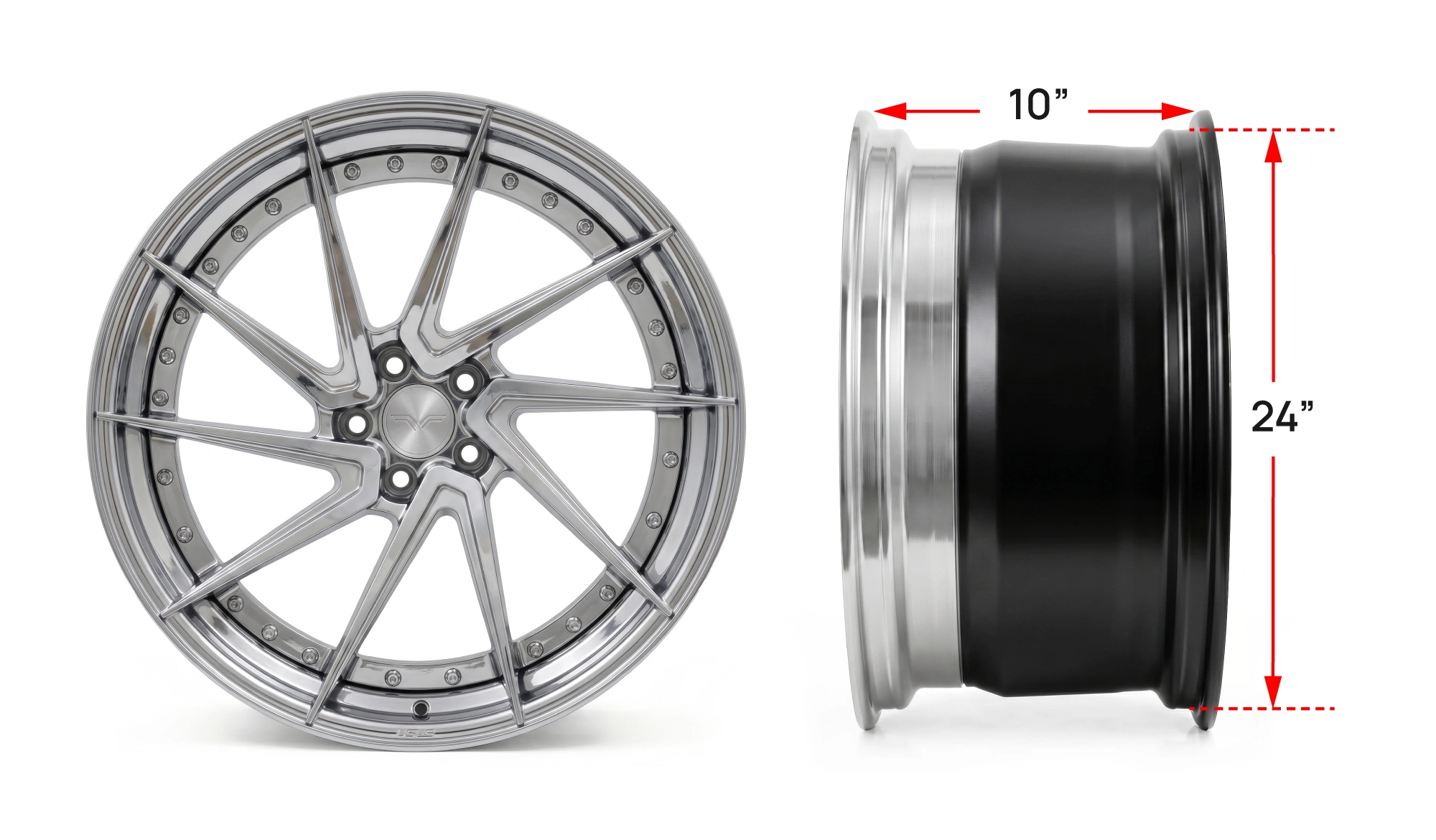
Rim Width refers to the width of the wheel measured from bead seat to bead seat. This is the area where the tire sits on the wheel, and it is not the same as the overall outside width of the wheel.
For example, a 24 x 10-inch wheel has a rim width of 10 inches but the overall outside width of the wheel may be approximately 11 inches, depending on the wheel lip and outer edge construction.
When calculating backspacing or offset, the overall wheel width may also need to be considered to ensure accurate fitment, brake clearance, suspension clearance, and proper fender positioning.
Rim Width is measured in inches.
At USUS, rim width is carefully selected based on the vehicle, tire size, brake clearance, suspension clearance, and desired fitment style to achieve both proper function and a balanced appearance.
Offset and Wheel Position
Offset determines how far the wheel sits inward or outward from the hub mounting surface. The correct offset helps achieve the desired stance while keeping enough clearance for fenders, suspension components, and inner wheel arches.
Offset is the distance between the wheel's hub mounting surface and the centerline of the wheel. This measurement is expressed in millimeters (mm) and determines how far the wheel sits inward or outward relative to the vehicle.
A wheel can have a positive, negative, or zero offset.
- Positive Offset (+): The mounting surface is positioned toward the outer face of the wheel, placing the wheel further inside the fender.
- Negative Offset (-): The mounting surface is positioned toward the brake side of the wheel, pushing the wheel further outward.
- Zero Offset (0): The mounting surface is aligned directly with the wheel centerline.
For example, a 15 x 7-inch wheel with a -6 mm offset would have approximately 3.75 inches of backspacing, leaving approximately 4.25 inches from the mounting surface to the outer edge of the wheel, including the lip.
At USUS, offset is carefully engineered to achieve proper brake clearance, suspension clearance, fender fitment, and the desired wheel stance while maintaining optimal performance and safety.
PCD, Center Bore and Bolt Pattern
PCD, center bore, and bolt pattern are essential fitment details that ensure the wheel mounts correctly to the vehicle. Accurate machining of these areas helps reduce vibration, improve installation precision, and support long-term reliability.
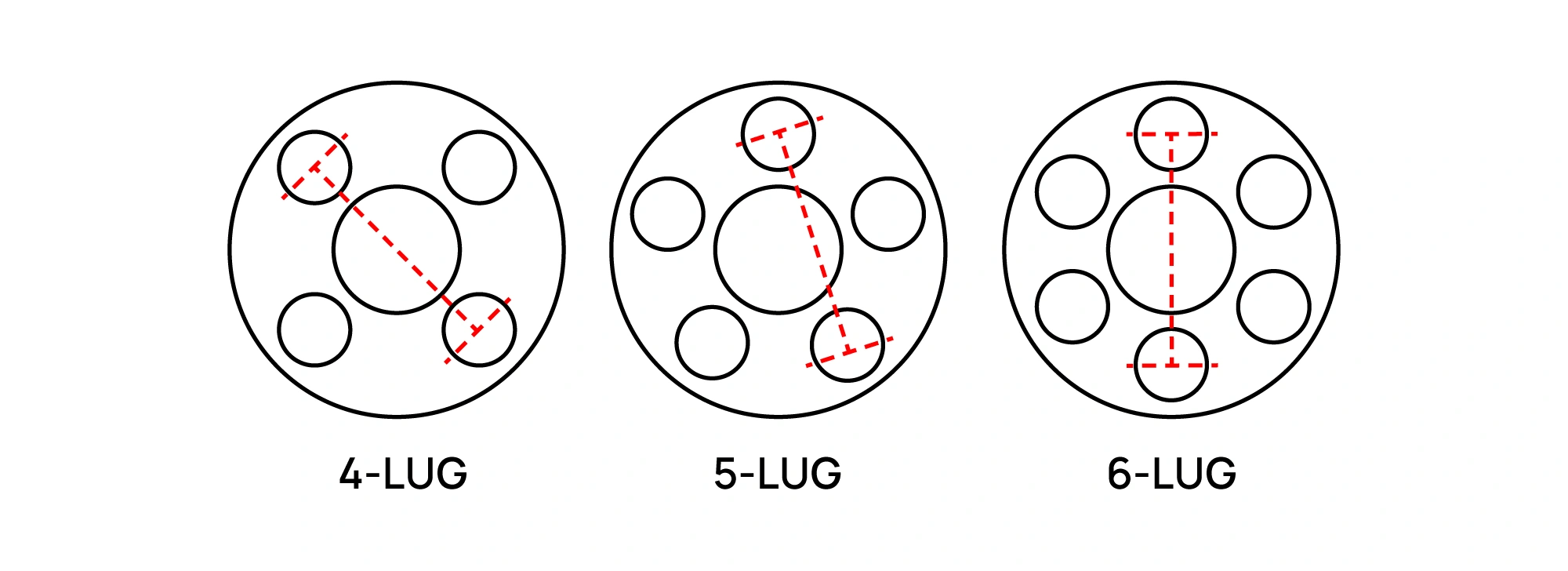
Bolt Circle / Stud Pattern (PCD)
PCD, also known as Bolt Pattern or Stud Pattern, refers to the number of bolt holes on the wheel and the diameter of the imaginary circle that passes through the center of each bolt hole.
For example, a 5-4.75 PCD means the wheel has 5 bolt holes, with a bolt circle diameter of 4.75 inches or 120.65 mm when measured according to the 5-stud measurement method.
5-Stud Wheels
Measure from the back edge of one bolt hole to the center of the second bolt hole across the circle.
4-Stud Wheels
Measure from the center of one bolt hole to the center of the bolt hole directly opposite.
6-Stud and 8-Stud Wheels
Measure the same way as 4-stud wheels, from center to center of the two bolt holes directly opposite each other.
At USUS, PCD measurement is carefully checked to ensure proper fitment, accurate wheel positioning, and safe installation for each vehicle application.
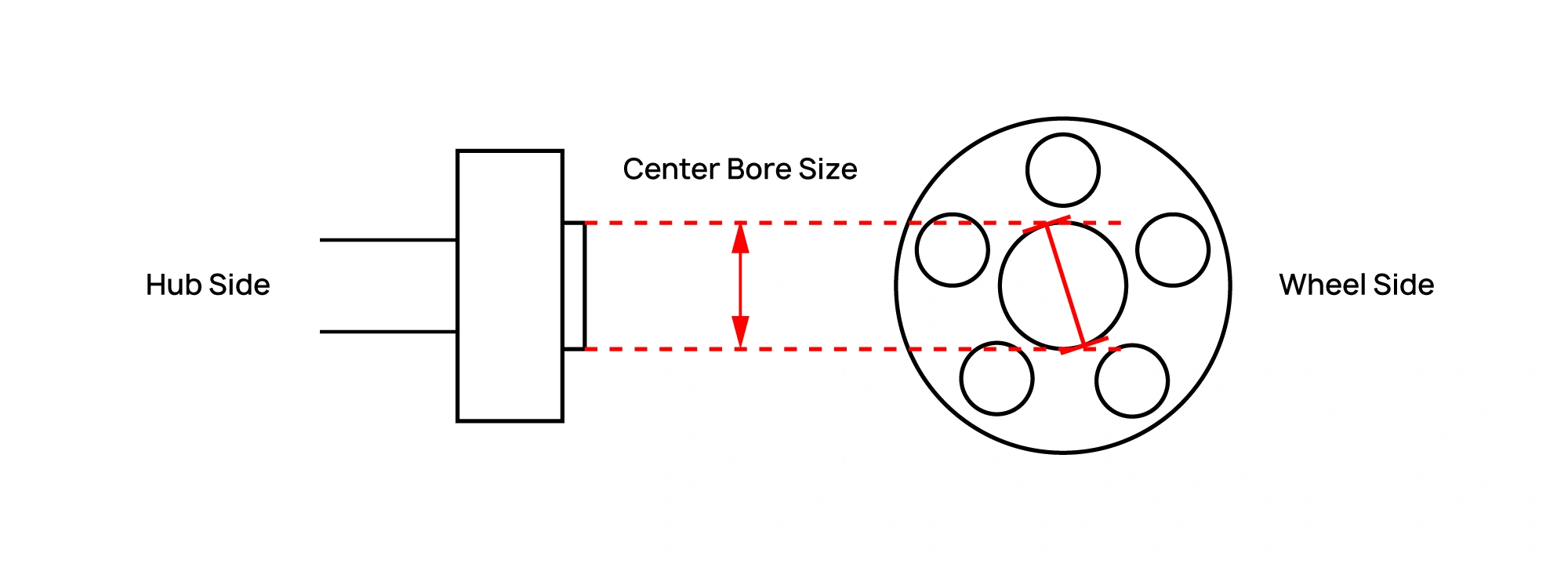
The size of the hole in the back of the wheel that centres the wheel properly on the hub of the vehicle.
Brake and Suspension Clearance
A proper wheel setup must provide enough clearance for brake calipers, suspension arms, and inner components.
This is especially important for performance cars, big brake kits, and custom suspension setups where every millimeter matters.
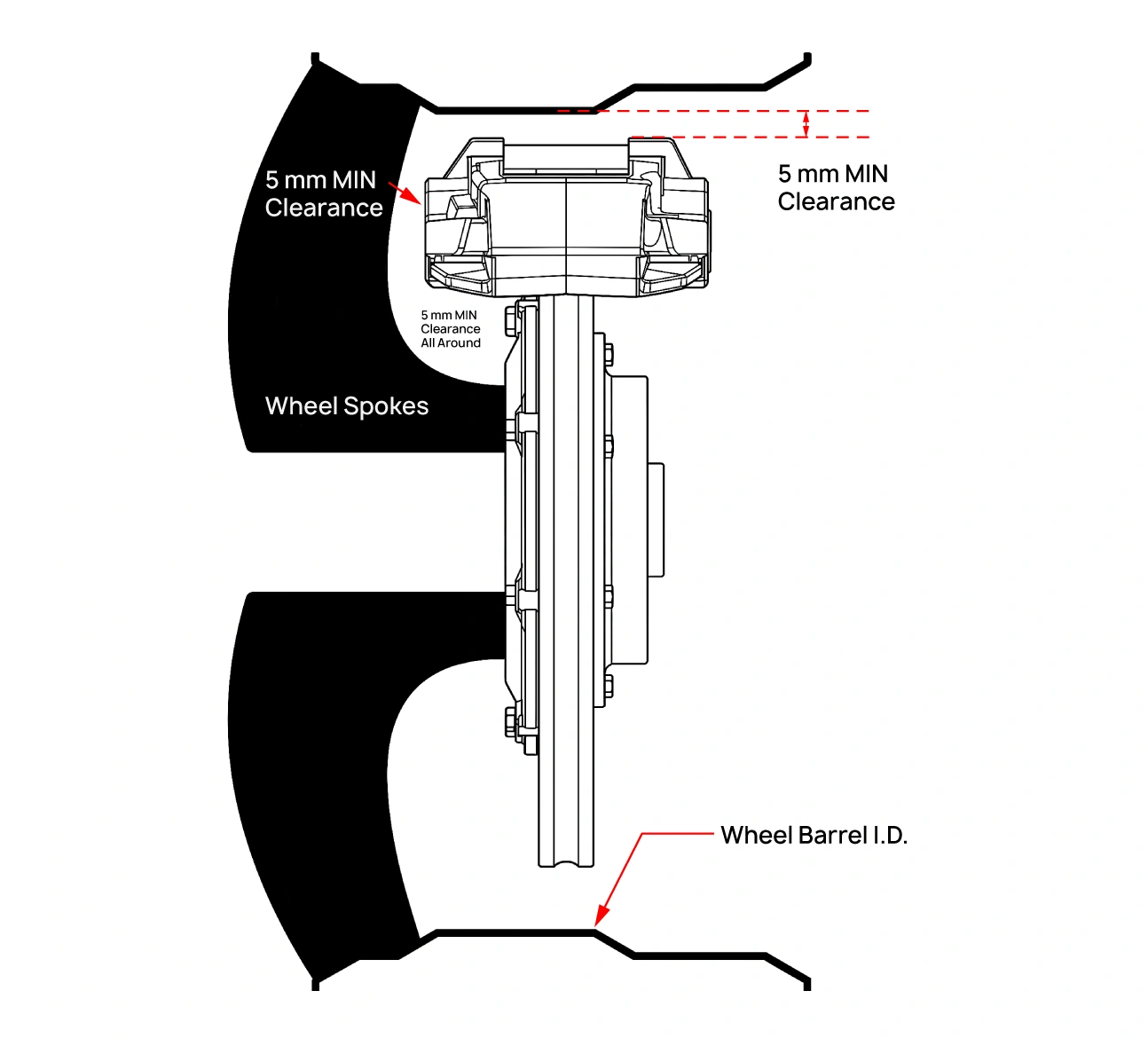
This diagram shows the required clearance between the brake caliper and the inner wheel structure, including the wheel spokes and inner barrel diameter. A minimum clearance around the caliper helps prevent contact between the wheel and brake components during installation and real driving conditions. At USUS, brake clearance is checked together with wheel diameter, rim width, offset, disc profile, and actual caliper dimensions to ensure safe and precise fitment.
Key Clearance Points
1. Wheel Spokes
The rear side of the wheel spokes must provide enough space from the brake caliper. If the spoke clearance is too tight, the wheel may contact or rub against the caliper during installation or driving.
2. Brake Caliper
The brake caliper is one of the main components that requires accurate clearance, especially on performance cars or vehicles equipped with big brake kits. If the wheel profile is not designed to clear the caliper, the wheel may not fit properly or may cause interference.
3. Wheel Barrel I.D.
The Wheel Barrel I.D. refers to the inner diameter of the wheel barrel. This area must have sufficient clearance to allow the brake caliper to sit inside the wheel without touching the inner barrel surface.
5 mm Minimum Clearance
The diagram indicates a minimum clearance of approximately 5 mm around the brake caliper. This clearance should be maintained around critical contact areas, including the spoke side, upper caliper area, and surrounding caliper profile.
Custom Fitment by USUS
USUS wheels are developed based on vehicle-specific measurements, design requirements, and customer preferences.
From diameter, width, offset, finish, and center cap details to brake clearance and overall stance, every wheel
can be customized to match the vehicle's character and the owner's lifestyle.